By insideSail
Automated technical check · version 1 ·
A west wind: where does the arrow come from?
Meteorological wind direction describes where the wind comes from, not the arrow’s destination.
In this guide
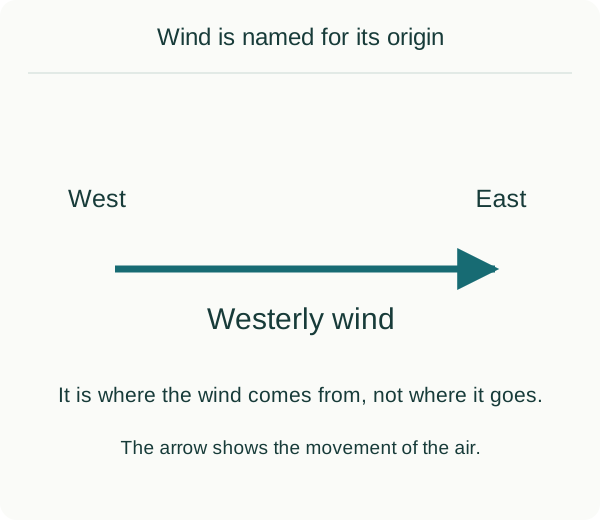
Original schematic illustration. Read the explanation and limitations in the lesson.
insideSailOriginal insideSail artwork — all rights reservedEnlarge the diagram
This difference is small in a sentence and large in a drawing. If an arrow shows air moving to the right, the wind’s name depends on the diagram’s north reference and stated convention. An educational image therefore needs orientation and a caption, even if it looks obvious to an experienced reader.
Direction, strength and time
A wind description can combine direction, speed and gust information. These are different fields. “West” does not give strength; “12 knots” does not give origin. An instantaneous observation, an average and a forecast are also different categories and should retain their labels.
On a moving boat, wind experienced aboard and meteorological wind are not automatically the same reading. Different applications can also use arrows showing origin or movement. Before interpreting one, locate its legend and data type.
The concept in a few words
Wind direction
Under the meteorological convention, it describes where the wind comes from.
Sources and references
- Marine forecast glossary ↗
Met Office · Wind direction convention; pressure units
Version: Institutional page. Jurisdiction: International.
Checked on
Discuss this concept
Loading the conversation…