By insideSail
Automated technical check · version 1 ·
Buoyage: a language made of several cues
Colour, shape, topmark and light help describe a mark; they are not a ready-made route.
In this guide
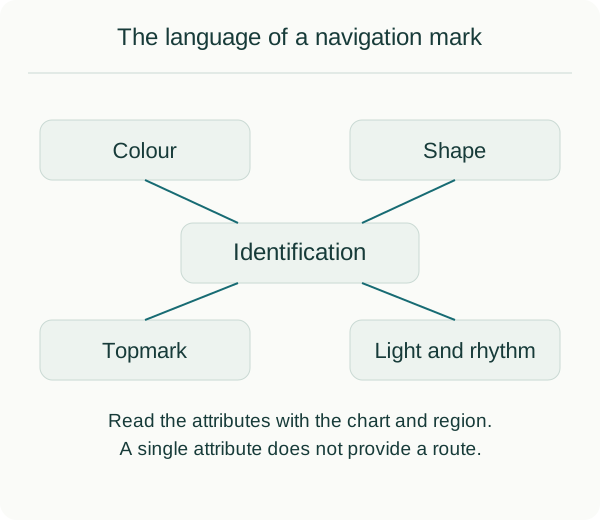
Original schematic illustration. Read the explanation and limitations in the lesson.
insideSailOriginal insideSail artwork — all rights reservedEnlarge the diagram
The first step in learning buoyage is to observe without jumping straight to a steering instruction. A mark combines attributes: body, colours, shape, a topmark where present and a light where fitted. Position and published information also provide context. This lesson introduces the language used by the source documents.
Families that organise learning
- Lateral
- Cardinal
- Isolated danger
- Safe water
- Special
- Emergency wreck marking
These names organise different chapters. A family name is not permission to navigate next to a mark. Detailed characteristics, limits and application conditions belong in specific lessons and the relevant official publications.
Separating observation from interpretation helps learning: describe the evidence first, then find the definition and context. The same discipline prevents a distant photograph or a single viewpoint from being treated as a complete identification.
Sources and references
- R1001 — The IALA Maritime Buoyage System ↗
IALA · Edition 2.0, June 2023 · Sections 2.1–2.6; lateral regions 2.1.1, 2.1.3, 2.1.4
Version: Edition 2.0, June 2023. Jurisdiction: International; implementation by competent authorities. Official catalogue and official download search index checked. Direct download returned HTTP 403 to the research reader; no full-document retrieval claimed.
Checked on
Discuss this concept
Loading the conversation…