By insideSail
Automated technical check · version 1 ·
Wind waves and swell: height and period tell different stories
A wave cannot be captured by one number. Distinguish shape, timing and origin.
In this guide
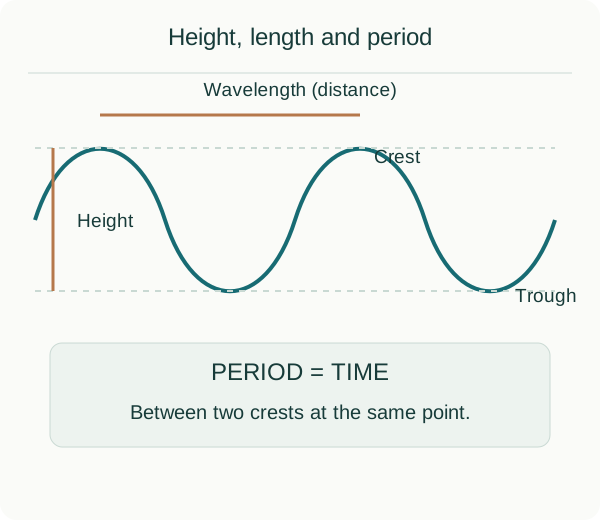
Original schematic illustration. Read the explanation and limitations in the lesson.
insideSailOriginal insideSail artwork — all rights reservedEnlarge the diagram
Wind waves relate to wind acting in the area; swell can arrive from distant generation areas. Both can coexist in a sea state. These terms explain why “there is little wind here” is not a complete description of waves.
The drawing is not every wave
The regular curve isolates concepts. At sea, waves vary, and bulletins can use statistical measures such as significant wave height. That measure is not a maximum for every individual wave. This lesson explains the distinction without using a height to classify conditions as safe.
- Metres: which height measure is given?
- Seconds: which period definition is used?
- Direction and time: which component and interval are described?
Operational interpretation of sea state needs current sources and appropriate competence. The useful first skill here is reading the unit and definition before comparing numbers.
Concepts in this lesson
Wave height
The vertical distance between a wave’s trough and crest; in a bulletin, check which statistical measure is used.
Wave period
Time between successive passages of a wave phase at a point, under the stated definition.
Sources and references
- Forecasting ocean waves ↗
Met Office · Wind waves and swell
Version: Institutional page. Jurisdiction: International.
Checked on - Beach forecast and tide times explained ↗
Met Office · Wave height, period and significant wave height terminology
Version: Institutional page. Jurisdiction: International. Beach-specific prediction rules are not generalised to vessels.
Checked on
Discuss this concept
Loading the conversation…