By insideSail
Published without technical review · version 2 ·
Before departure: walk through boat and crew preparation
Turn a list into understood checks, resolving uncertainty before departure.
In this guide
A completed checklist does not prove readiness. “Radio: yes” may mean a device exists, has power or can be operated by crew who know their position — different statements.
This lesson organises a walkthrough of an individual boat and its people before a recreational passage. It is adaptable editorial organisation rather than a legal inventory or survey.
It begins with expected conditions and ends with an informed decision to depart, delay or change plans.
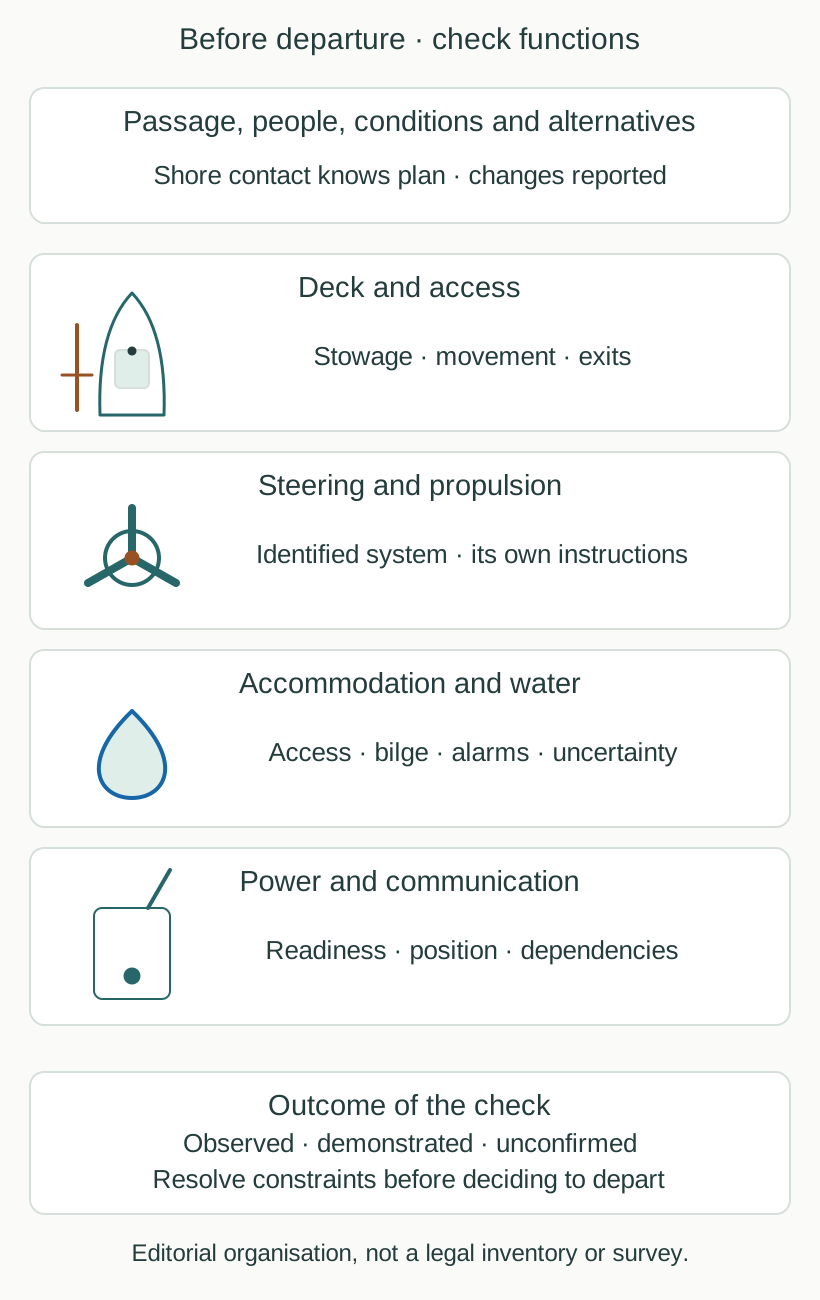
Original teaching illustration; bounded case, not to scale. See the lesson’s assumptions and limits.
insideSailOriginal insideSail artwork — all rights reservedEnlarge the diagram
Begin with the passage rather than a locker
Identify destination, duration, conditions, crew and alternatives. A short trip with two familiar crew differs from a first overnight passage with children and newcomers.
Consult relevant forecasts and local information and check vessel and capability suitability. Decide who ashore knows the plan and how changes will be reported.
That contact should not guess what a delay means; agree how they act if expected communication is missing.
Follow the boat through concrete functions
- Deck and access: stowage, movement areas, support and visible obstructions.
- Steering and propulsion: identity, documentation and checks appropriate to installed systems.
- Accommodation and water: unsecured equipment, bilge access, alarms and uncertain water ingress.
- Power and communication: available resources, dependencies, current position and vessel identity.
- Safety and people: equipment fit and access, exits, roles and emergency communication.
Each check needs an intelligible outcome: observed, demonstrated according to instructions, unconfirmed or a known defect. Do not turn an unidentified valve to complete a list.
Hearing a pump does not establish overall drainage capability; two devices on one battery are not independent power sources. Photographs and specifications help identification but do not replace appropriate inspection or testing.
Critical uncertainty remains uncertainty and may need professional help or a changed plan.
A short demonstration another person understands
Show crew the equipment they will use and ask them to identify location and purpose. Someone familiar with another lifejacket or signal may still need familiarisation with this one.
Explain how to alert the helm, where to remain and what to do if a task cannot be completed. Short timely briefings recur before important manoeuvres; the first conversation need not deliver every instruction for an entire week.
Decide and retain a useful record
Record passage constraints and the resulting decision. Cancelling can demonstrate good preparation rather than failure.
Changes of weather, people or route require reassessment. Records do not publish medical information, private contacts or exact vessel position to the community.
Identify equipment and date where useful and retain private documentation. Legal requirements depend on flag, use and area-specific sources and versions; this organisation does not impose one inventory on every European boat.
Sources and references
- Yacht sailing and motorboating ↗
RNLI · Live safety checklist: preparation, weather, equipment, shore contact and means of assistance.
Primary public guidance read; UK emergency/licensing examples not exported as pan-European obligations.
Checked on - How to brief your crew ↗
Royal National Lifeboat Institution · 4 October 2019, role assignment, specific/timely briefing and actual equipment familiarisation.
Official article directly read. New walkthrough is original editorial organisation, not an RNLI checklist.
Checked on
Keep discovering
The next piece of the puzzle
Discuss this concept
Loading the conversation…