By insideSail
Published without technical review · version 2 ·
Fire aboard: prevention, escape and proportionate response
Recognise hazards and protect people before attempting firefighting.
In this guide
Smoke and fire can quickly make an exit unavailable in a small interior. Prevention involves heat sources, fuels, installation, stowage and exit access rather than merely having an extinguisher.
Response does not begin by choosing any red cylinder. Hazard, classification and equipment scope matter.
This lesson prepares conversations and accompanied exercises; actual firefighting requires training, situation assessment and a preserved escape route.
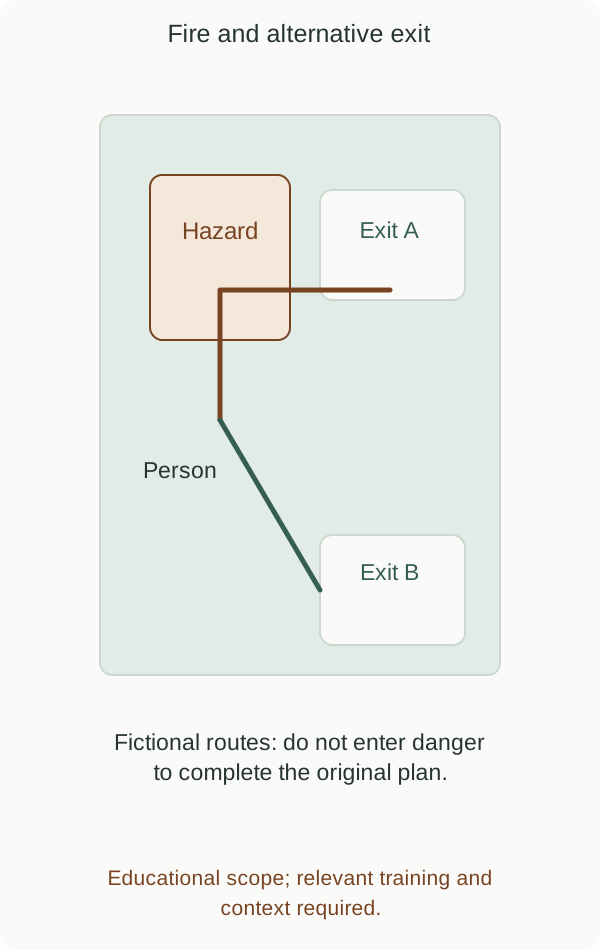
Educational scope; relevant training and context required.
insideSailOriginal insideSail artwork — all rights reservedEnlarge the diagram
Recognise what is burning
The fire-triangle model connects heat, fuel and oxygen without independently determining safe firefighting. Cooking oil, combustible liquids and solids present different hazards; energised electrical equipment adds another condition.
An unsuitable agent can worsen the situation. Equipment marking and specific instructions should be understood during preparation, without turning one manufacturer’s table into a rule for the whole boat.
Prevention and isolation are different tasks
Electrical wiring, gas and fuel equipment need appropriate installation and servicing. An educational page provides no repair circuit.
A guided briefing identifies sources and intended isolation controls, including anything unsafe to reach during a fire. Entering smoke to complete a sequence is not preparation, and a flame is never used to test a gas leak.
Preparation keeps people away from hazards rather than assigning improvised tasks.
Smoke, gas and carbon monoxide
Smoke, fuel leakage and carbon monoxide are different phenomena. Carbon monoxide is odourless and can result from incomplete combustion; smell cannot detect it.
Alarms have distinct functions and instructions; intended ventilation should not be obstructed by stowage. Heater or exhaust changes belong to the actual system and require competent assessment.
These subjects connect fire prevention and health without making one sensor reading an interior’s certification.
What needs demonstrating before departure
- Exits and equipment access without unnecessary exposure.
- Understanding of firefighting agent markings and scope.
- An alarm understood by everyone and crew headcount.
- Help request and coordination when capacity is exceeded.
- Documented servicing and uncertainty referred to a competent technician.
Mark exits on a layout and where storage could change access. Add a hazard card to one area and ask which route becomes unusable without exposing people.
Use no real smoke. A door shown on paper does not establish that it opens in the present configuration.
The exercise also distinguishes extinguisher recognition from knowledge of suitability and operation. Nobody should approach an unknown source to obtain a better photograph or diagnosis.
Preparation retains system documents, routes and access questions. Smoke, carbon-monoxide and other detectors have different functions; one indication certifies no absence of other hazards.
The purpose is discovering weaknesses before an incident, not proving firefighting capability through a tabletop exercise.
Plans from larger or commercial vessels with different systems cannot be transferred without analysis. Legal minimums and servicing depend on jurisdiction, use and equipment.
The platform should identify those obligations by source and version, separately from editorially explained good practice.
Sources and references
- Fire safety on boats ↗
Royal Yachting Association · Prevention; escape; extinguisher suitability and galley context.
Directly consulted official guidance. No extinguisher sizing, fire-system installation or universal legal inventory.
Checked on - Carbon monoxide ↗
Royal Yachting Association / Boat Safety Scheme guidance · Sources of carbon monoxide; ventilation and alarms.
Carbon monoxide is distinguished from smoke and fuel leaks; no sensor-installation design.
Checked on
Keep discovering
The next piece of the puzzle
Discuss this concept
Loading the conversation…