By insideSail
Published without technical review · version 2 ·
Personal safety: prepare every person
Fit, access, communication and conditions connect equipment to its wearer.
In this guide
Personal equipment serves an actual person with particular clothing, mobility and abilities. Three lifejackets in a locker do not establish that a family of three can wear and use them.
A child, an adult with limited mobility and an experienced crew member may need different preparation. Begin with the scenario: boarding, moving on deck, darkness, cold and possible immersion.
Then identify resources helping the person before, during and after difficulty.
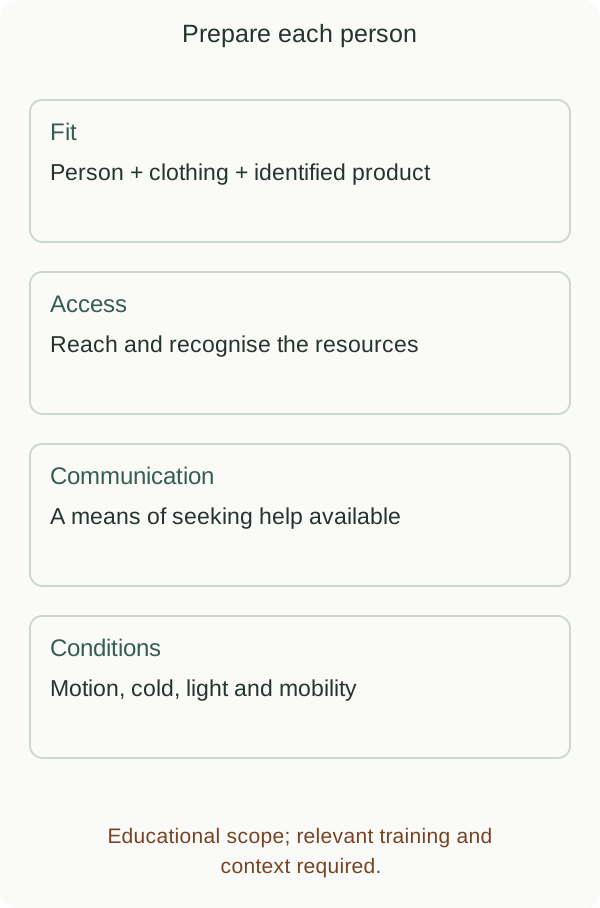
Educational scope; relevant training and context required.
insideSailOriginal insideSail artwork — all rights reservedEnlarge the diagram
Flotation and environmental protection
A buoyancy aid and a lifejacket are not synonyms. Selection depends on activity, wearer and declared characteristics.
Marking and instructions establish the product’s scope, rather than colour or appearance. Clothing protecting against wind and water serves another need.
A lifejacket does not eliminate exposure and cold, just as a coat does not perform its job. Assessing the assembly includes how its layers are worn together.
Being seen, heard and able to call
A light, whistle and electronic devices perform different jobs. One attracts nearby attention; another can transmit information to a network.
Neither guarantees that the wearer will be found. Position on the equipment, access with occupied hands and activation instructions matter.
Distinguish original product features from later additions. An owner-installed accessory belongs to that individual configuration rather than automatically to every lifejacket in the family.
Accompanied preparation before departure
- Identify the person and their assigned equipment.
- Read product markings and instructions, including limits and servicing.
- With competent guidance, confirm wearing and adjustment with the actual clothing.
- Locate signalling resources and explain how help is requested.
- Identify mobility difficulties and required assistance before proceeding.
Preparation does not require activating a beacon, firing a signal or inflating equipment with a specific test procedure. Practice means choosing an appropriate training method without raising a real alert.
A simulator or demonstration product can explain functions unsuitable for unrestricted testing. The routine should also avoid breaking seals, modifying devices or draining batteries merely to satisfy an editorial checklist.
What the record should retain
In a preparation exercise, the wearer locates and recognises equipment using demonstration items. The leader asks what changed between light clothing and cold-weather clothing without assuming earlier adjustment remains correct.
“It was checked” needs an object, assessor and conditions. A product check can coexist with unresolved wearer fit.
Record whistle access, light recognition and locator-training needs separately. Do not activate in-service components merely to satisfy curiosity; arrange an appropriate demonstration beforehand.
A useful outcome is a set of identified questions and responsibilities rather than a tick beside “lifejacket”. This detail turns inventory into personal planning without inventing approval or confusing a familiar item with demonstrated ability.
Identity, instruction-check date, documented servicing and unresolved questions make preparation traceable. Personal health information need not be public.
Safety-relevant information can be shared privately with the people organising the voyage, respecting its subject. The platform should distinguish an owner’s declared check from evidenced professional review.
Sources and references
- Yacht sailing and motorboating ↗
RNLI · Safety checklist: briefing, training, weather, shore contact and means of help.
Preparedness guidance only. No statistics or comparative risk scores imported.
Checked on - Lifejackets and buoyancy aids ↗
RNLI · Choosing/fitting a lifejacket; safety lanyards; sprayhood, light, whistle and locator; manufacturer inspection.
Public guidance directly consulted. Irish legal examples do not establish Portuguese or UK requirements.
Checked on
Keep discovering
The next piece of the puzzle
Discuss this concept
Loading the conversation…