By insideSail
Published without technical review · version 2 ·
VHF: construct a distress call and message
A fictional card separates identity, position, danger and assistance required.
In this guide
A call announces the speaker and priority; the message adds information needed to understand and respond. This lesson develops a VHF distress voice example, preserving procedural words while explaining their elements.
It uses fictional fields without a transmitter or identity programmed into a radio. Real distress is used for grave and imminent danger requiring assistance.
Learning belongs in a non-transmitting simulator and suitable training rather than a marine channel.
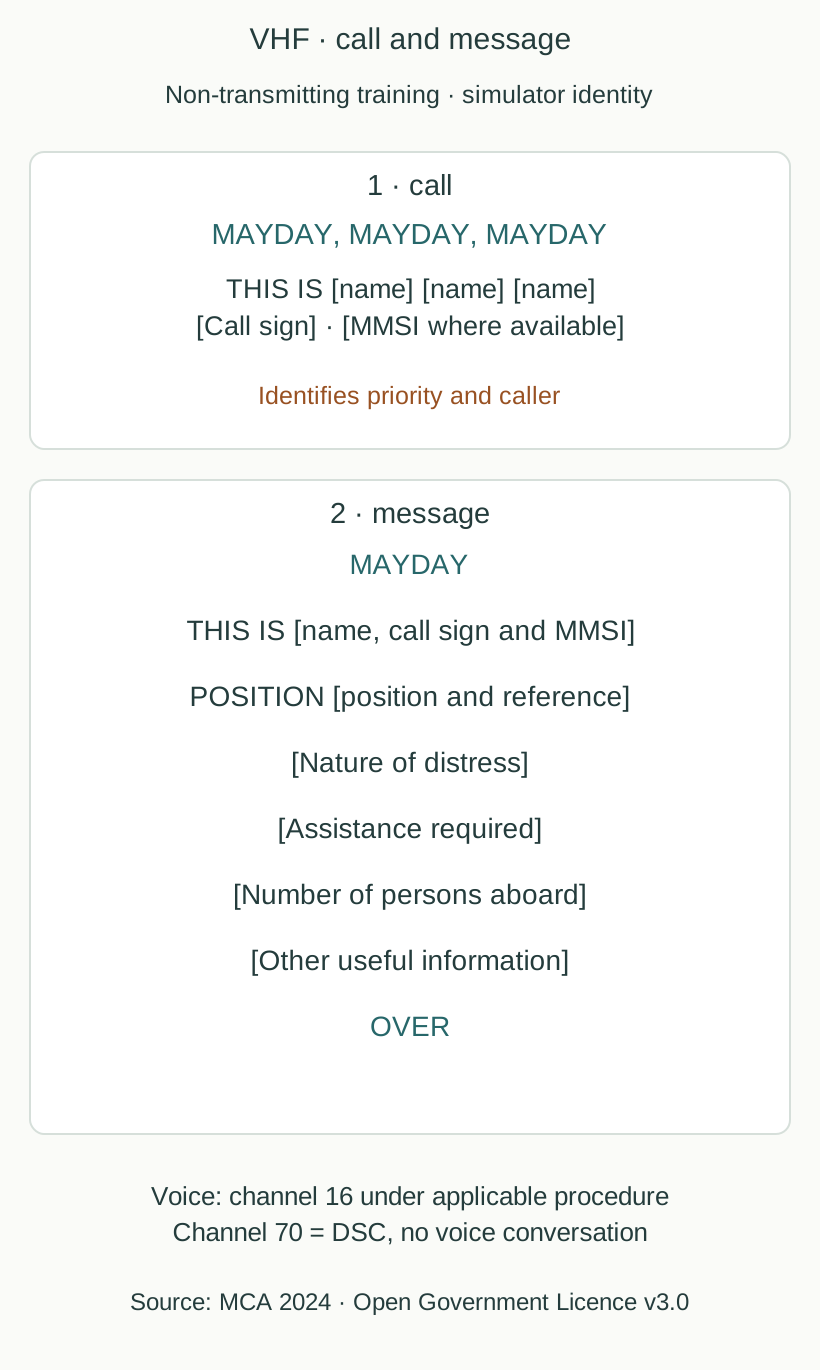
Original teaching illustration; bounded case, not to scale. See the lesson’s assumptions and limits.
insideSailOriginal insideSail artwork — all rights reservedEnlarge the diagram
DSC and voice: complementary functions
A DSC alert sends digital information, while voice develops the situation. MCA’s July 2024 guidance specifies the distress call and message on channel 16 after DSC acknowledgement or about 15 seconds.
This interval belongs to that cited guidance rather than an indefinite wait for acknowledgement. A button sequence is not made a universal gesture; instructions, configuration and operator training matter.
Channel 70 is not for voice conversation. This lesson isolates the voice information card rather than improvising another vessel’s acknowledgement, relay or cancellation.
Read the call and then the message
| Part | Training-model content |
|---|---|
| Call | MAYDAY, MAYDAY, MAYDAY. THIS IS [name] [name] [name]. [Call sign]. [MMSI, where available]. |
| Message | MAYDAY. THIS IS [name, call sign and MMSI]. POSITION [position]. [Distress]. [Assistance required]. [Persons aboard]. [Other useful information]. OVER. |
Procedural wording is attributed to MCA guidance available under Open Government Licence v3.0. MAYDAY is not replaced with a translated signal word; explanations use the reader’s language.
Unknown identity must not be invented, and a field should not delay communicating real danger. “OVER” hands the turn to another station rather than decorate the sentence or terminate all communication.
Listen to the reply and confirm important or unclear information.
Work a card without creating a real alert
Coordinates need hemispheres and format. “Forty-one, eight” distinguishes neither degrees from minutes nor north from south and east from west.
Read the card without mental format conversion during the exercise. Identify the time of an older position rather than present it as current.
Inventing an emergency’s coordinates at a real location is unnecessary for learning message order. Subsequent changes in position or condition are new information to report clearly.
Routine and priorities are not mixed
A marina berth enquiry does not use MAYDAY. Routine contact listens first, identifies recipient and caller, and moves to an appropriate working channel when agreed.
PAN PAN and SECURITÉ have their own functions explained in the related lesson; they are not substitutes chosen to sound less alarming. Operator qualification, station licensing and national rules remain distinct.
This card is no licence and establishes neither installation transmission nor reception performance.
Sources and references
- GMDSS VHF DSC procedures for small boat users ↗
Maritime and Coastguard Agency · Updated 24 July 2024: Distress alert, voice call/message; routine/coast station calls.
Official source directly read; Crown copyright 2024 under Open Government Licence v3.0 except stated third-party items. Procedural words retained with attribution; fictional identity placeholders, no live transmission or reproduced artwork.
Checked on - Recommendation ITU-R M.541-11 — DSC operational procedures ↗
International Telecommunication Union · November 2023; Annex 1 distress/urgency/safety; Annex 3 inadvertent alerts.
Official November 2023 PDF consulted. VHF voice example is separate from equipment-specific button sequences, distress relays and national licensing.
Checked on
Regulatory references
- ITU-R M.541-11 ↗
November 2023 · ITU · International maritime radio service
Verified on
Keep discovering
The next piece of the puzzle
Discuss this concept
Loading the conversation…