By insideSail
Automated technical check · version 2 ·
Onboard equipment: think in needs and systems
Energy, water, space and access help assess real life aboard.
In this guide
A long equipment list can impress without explaining life aboard. A refrigerator needs energy and accessible space; a shower needs water and a way to manage moisture; navigation equipment needs power, sensors and understandable information.
Start with the need, follow the system supporting it and ask how it affects everyday life. This reading compares individual boats without confusing accessory count with quality of life.
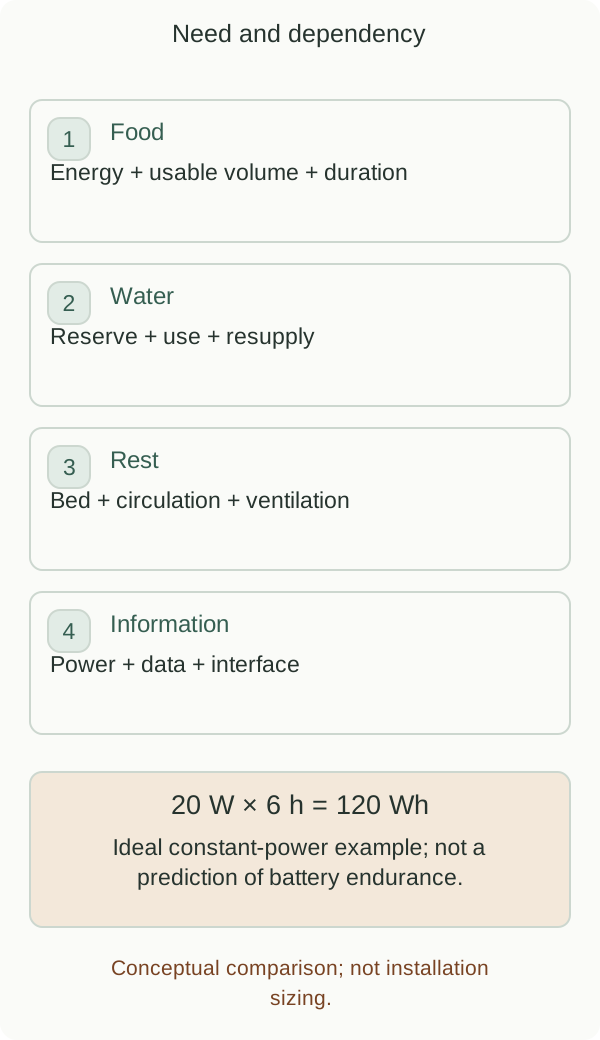
Conceptual comparison; not installation sizing.
insideSailOriginal insideSail artwork — all rights reservedEnlarge the diagram
One need can have different solutions
For a family of three, keeping food can mean daily shopping in a port or several days without resupply. Sleeping well may depend more on ventilation, bed access and privacy than on another cabin.
The table separates function and resource. These are analysis criteria: they do not assess an installation’s safety or select a replacement product.
A useful answer describes a scenario and makes its dependencies visible.
| Need | Resource to understand | Everyday question |
|---|---|---|
| Food | Energy and usable volume | What fits, and for how long? |
| Water | Tank, consumption and resupply | Who uses it, and where is it replenished? |
| Rest | Ventilation, bed and circulation | Can people sleep without dismantling the saloon? |
| Information | Power, data and interfaces | What information remains if one display fails? |
Power is not stored energy
Watts measure power: a rate of energy consumption or transfer. Watt-hours measure energy.
Ampere-hours measure electric charge and relate to energy only after stating voltage and assumptions. A 100 Ah specification does not independently establish endurance.
Capacity also depends on discharge conditions and battery technology. A teaching calculation therefore establishes no usable capacity, permitted discharge percentage, cable size or protection rating.
The relationship in numbers
Ideal energy = constant power × time
W × h = Wh; constant-power model.
Nominal capacity and endurance answer different questions
One water reserve may serve several competing uses. Two people taking frequent showers and three people using water at another rate do not automatically provide a simple comparison.
A larger tank occupies space and adds mass when full; a pump and distribution paths also belong to the system. Endurance is a contextual estimate.
Community consumption reports should identify people, period and use, keeping experience separate from a model specification.
Access also involves compromises. A hidden component can make an interior look tidy while being difficult to identify or document.
A storage compartment may contain equipment requiring reserved access. When studying a layout, mark where people move and where objects are stored.
This produces an ergonomics question rather than permission to obstruct ventilation, exits or devices. Those limits belong to the installed system’s documentation and assessment.
Compare the individual boat, not only the advertisement
“It has solar” identifies an equipment family while leaving stated power, versions and connections unresolved. “It has heating” identifies neither fuel, distribution nor servicing.
A sound comparison keeps separate columns for the declaration, its supporting document and unresolved questions. It does not need a comfort score before those elements are known.
First identify the system, then compare its fit with the scenario you actually intend.
- Describe the need before counting equipment.
- Power, energy and nominal capacity are different quantities.
- Layout and access are part of equipment usefulness.
Sources and references
- BMV-700 manual — Battery capacity and Peukert exponent ↗
Victron Energy · Section 8: capacity, discharge-rate dependence and approximation limits.
Official live manual consulted. Publication date is not stated. No monitor settings, wiring, charging values or universal usable-capacity percentage imported.
Checked on
Keep discovering
The next piece of the puzzle
Discuss this concept
Loading the conversation…