By insideSail
Published without technical review · version 2 ·
The sail wardrobe: function, support and overlap
Distinguish main, jib, genoa, staysail, spinnaker, gennaker, Code Zero and storm sails.
In this guide
Position and function give a sail meaning. A commercial name does not always define one geometry: cruising language and racing rules can use words differently.
This lesson introduces families for reading an inventory. Shapes are schematic rather than certified cuts, measured areas or wind ranges.
There is no need to select a sail immediately. First understand where it works, how it is supported and which question it addresses.
The drawing contains no deployment or trimming procedure.
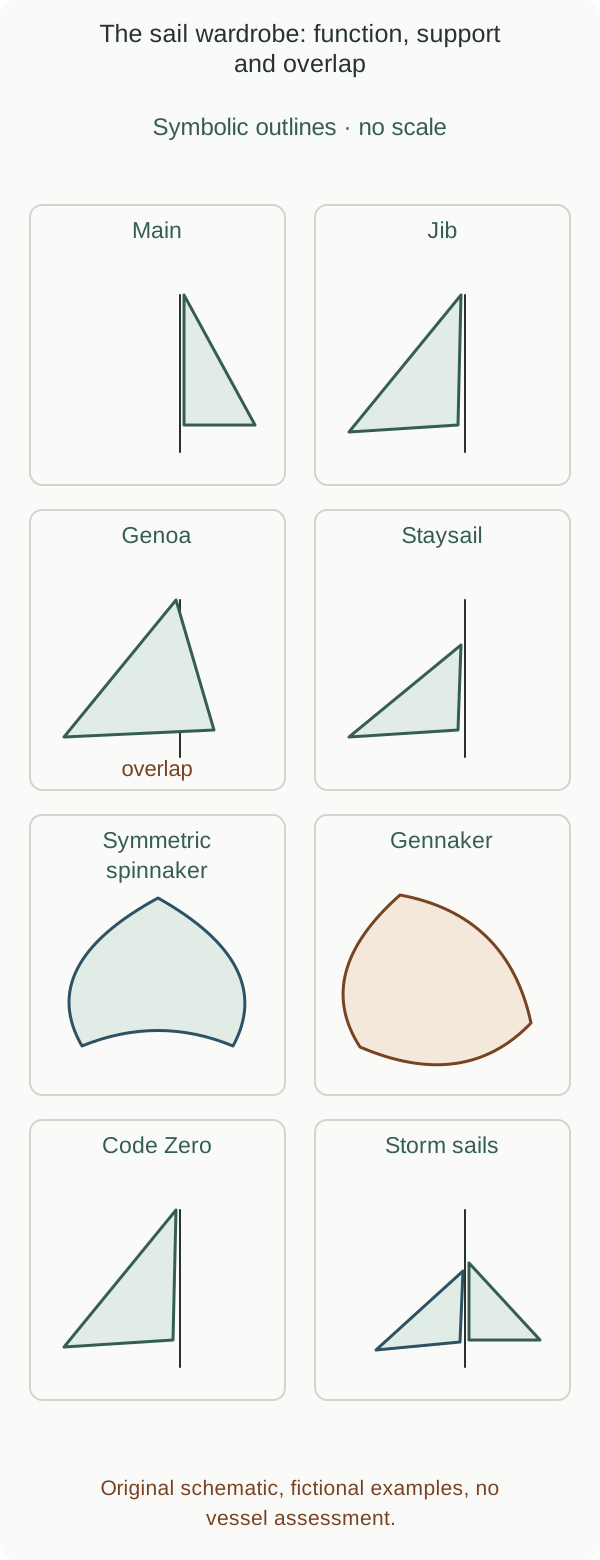
Original schematic, fictional examples, no vessel assessment.
insideSailOriginal insideSail artwork — all rights reservedEnlarge the diagram
Main and supported headsails
The mainsail works aft of the mainmast. In the triangular arrangement shown, its luff is by the mast, foot below and leech along the aft edge.
A jib is a headsail without mast overlap in usual classification. A genoa overlaps, with part of the sail extending aft of that reference.
Perspective and wind distort photographs; documentation and measurements better establish overlap. “Bigger” alone is not a technical synonym for genoa without specifying geometry and the reference being compared.
Staysail indicates a sail associated with a stay; context establishes its location. On a cutter, an inner staysail works inside the outer headsail.
Other uses can refer to a different reaching sail in a wider combination. Identifying support and function is more reliable than reading the word alone.
Furling genoa also describes a mechanism rather than another rig family. Keeping those fields distinct preserves an inventory without turning each accessory into a boat classification.
Sails flying forward of the boat
| Family | Initial recognition |
|---|---|
| Symmetrical spinnaker | Similar halves; the drawing highlights symmetry. |
| Gennaker / asymmetrical | Asymmetrical geometry; tack and clew have different roles. |
| Code Zero / code sail | A reaching sail with its own geometry; its label gives no universal angle or operating limit. |
Spinnaker is not necessarily a synonym for every colourful sail. Asymmetrical sails can carry that name, while gennaker is common cruising terminology.
Code Zero can also have particular measurement definitions; not every product using the label belongs to one regulatory class. Preserve declared names, measurements and documentation in the inventory.
Furlers, bags or socks add handling information rather than establishing suitability for given conditions. A product description cannot replace sail and rig operating guidance.
Storm equipment is more than a smaller sail
Storm jib and storm trysail are families intended for storm use. A trysail is not simply a partly furled main, and reduced cloth does not establish equivalence to a storm sail.
Material, cut, support and installation belong to the required evidence. This lesson gives no wind limits, regulatory area prescription or universal fitting order.
Procedures depend on equipment and require teaching and verification for the actual arrangement. A bag labelled “storm” is an inventory observation, not a verified operating capability.
Sources and references
- Flying Sails ↗
North Sails · Code sails and cruising gennakers descriptions.
Manufacturer functional categories directly read; names do not establish rating classification or universal angles.
Checked on - Upwind Sails Guide ↗
North Sails · Mainsail, headsail and storm-sail descriptions.
Manufacturer taxonomy directly consulted. No sail-specific wind range, area rule, product selection or artwork reproduced.
Checked on - Specialty Reaching Sail Guide ↗
North Sails · Reaching sail and staysail functions.
Selected functional descriptions directly read; advertised speed/balance benefits and deployment recommendations are not adopted.
Checked on
Keep discovering
The next piece of the puzzle
Discuss this concept
Loading the conversation…