By insideSail
Automated technical check · version 2 ·
Sail trim: orientation, shape and area
Understand control functions before looking for settings.
In this guide
A sail is a flexible surface. Its orientation relative to air, its shape and the area in use are different information.
We can imagine the same area at different orientations, or similar orientations with different shapes. Reducing sail adds a change in the area in use.
Separating these dimensions explains why sail trim does not correspond to one control or one number applicable to every sailboat.
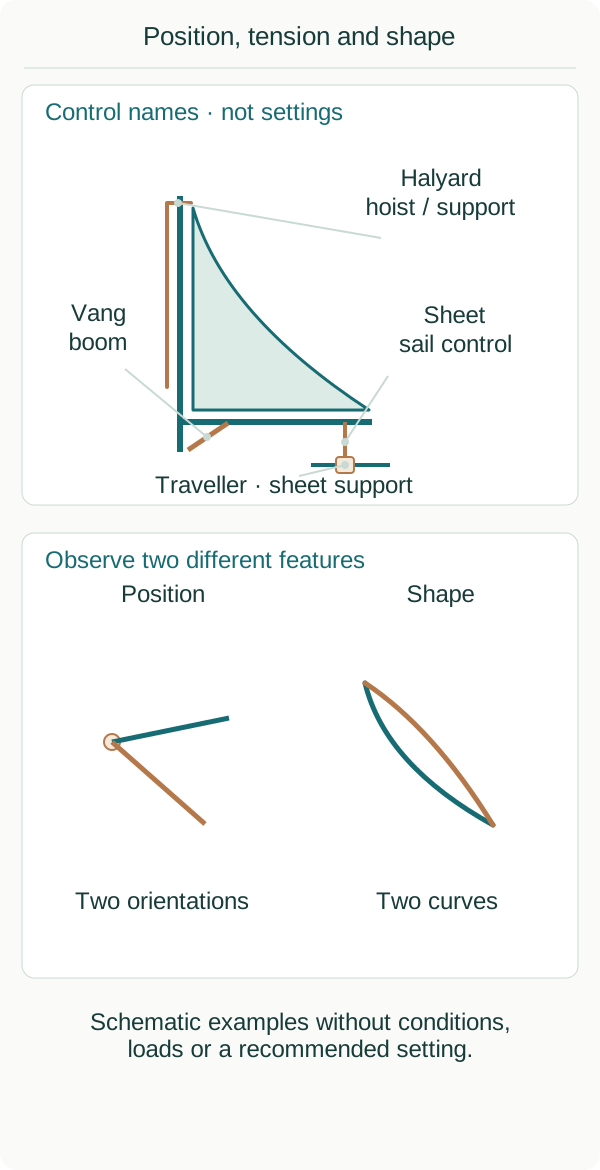
Location and observation of generic families, without instructions for actual conditions.
insideSailOriginal insideSail artwork — all rights reservedEnlarge the diagram
Name areas to understand relationships
In the triangular mainsail example, luff names the forward edge beside the mast; leech the aft edge; and foot the lower edge. Head is the top corner, tack the lower forward corner and clew the lower aft corner.
These are sail locations rather than line names. Connecting each name with its physical position explains which part a description means, even when different documents use different drawing orientations.
Each control participates in a relationship
The halyard relates to hoisting and to the sail’s upper area. The mainsheet participates in sail control through the boom and installed geometry.
On systems that have one, a traveller moves the sheet’s attachment point through a car and track. A vang or kicker participates in restraining the boom from rising.
Identifying different functions does not mean their effects on the sail are completely independent.
Other names identify more localised relationships: an outhaul relates to the mainsail’s lower aft corner, while a cunningham relates to luff tension. Not every boat has identical hardware, and different products can combine functions.
The figure maps relationship families without control settings or a tuning sequence. The central halyard and sheet definitions explain function, while documentation establishes the system’s configuration.
Shape is more than a side silhouette
Sail depth describes curvature within a section rather than merely width in a photograph. Twist describes the difference in orientation between sections at different heights.
A sail can have the same side-view area while its shape relationships vary with height. These words help explain three-dimensional descriptions.
They do not specify desirable depth or twist: that depends on the sail, flow and context.
An example separating all three dimensions
Useful observation identifies what was compared. “The shape changed” is clearer when it names the section or area; “the sail became smaller” is clearer when it distinguishes area in use from a photograph at another perspective.
Orientation can change apparently visible area without changing available cloth. Likewise, a differently positioned boom does not alone establish the complete shape of the sail above it.
The reefing and furling lesson develops the distinction between reducing area in use and stowing a sail. At this conceptual level, controlling, reducing and storing do not always describe the same job.
Moving to specific settings requires the actual system, documentation and guided practical learning. This functional map prepares that explanation without prescribing values, reefing conditions or speed outcomes.
Takeaways
- Orientation, shape and area are different dimensions.
- A control names a function within installed geometry.
- Actual settings and reefing in real conditions require practical learning.
Concepts in this lesson
Sail trim
Adjustment of sail orientation and shape through installed control relationships; distinct from reducing the area in use.
Sail twist
The difference in orientation between sail sections at different heights; it is neither sail area nor a universal setting.
Sources and references
- Hints and Advice on Rigging and Tuning ↗
Seldén Mast · Printed pp.12–14 Running rigging; p.56 Booms.
Selected official PDF sections consulted on 10 October 2026. Component/control identity only; no tuning, loading or reefing instructions. Edition year not inferred.
Checked on - Mainsail — anatomy vocabulary ↗
UK Sailmakers · Anatomy of a mainsail: named edges and corners of the triangular example.
Only edge/corner identity used. Universal hoisting order, behaviour, reefing thresholds, trim prescriptions and performance claims elsewhere on the page excluded.
Checked on
Keep discovering
The next piece of the puzzle
Discuss this concept
Loading the conversation…