By insideSail
Automated technical check · version 1 ·
Material, construction and diameter: three different questions
Two similar-looking ropes can have different characteristics.
In this guide
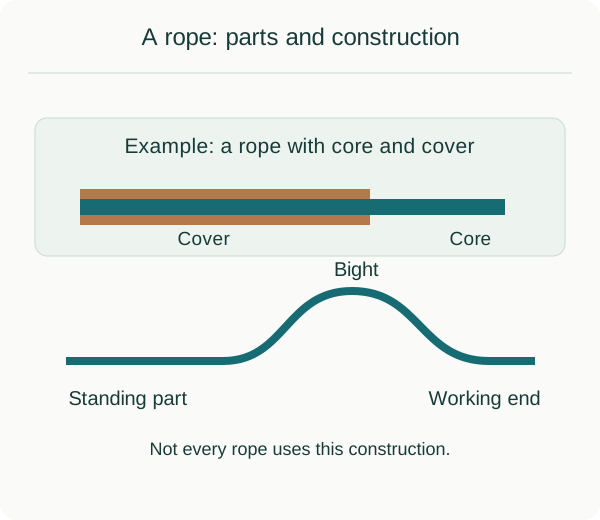
Original schematic illustration. Read the explanation and limitations in the lesson.
insideSailOriginal insideSail artwork — all rights reservedEnlarge the diagram
A rope label may combine a fibre, a construction and a diameter. These are three complementary pieces of information. Fibre describes the material; construction describes how yarns are arranged; diameter describes a dimension. None of these alone summarises the product’s behaviour.
| Question | What to look for |
|---|---|
| What is it made of? | Core and cover materials, where present |
| How is it built? | Twisted, braided, with or without core/cover |
| How was it characterised? | Product data sheet and data conditions |
In a core-and-cover rope, the outer and inner parts can use different materials and have different roles. Other ropes do not have that division. Elongation, strength and behaviour under abrasion or exposure are not synonyms: a sales description may highlight just one property.
What this comparison cannot decide
This vocabulary does not specify a rope for a load, fitting or system. An actual application depends on relevant instructions and sizing criteria. Avoid turning “stronger” into a conclusion about better use: the aim is to understand data before recommending equipment.
Concepts in this lesson
Rope core
The inner part of a core-and-cover rope; not every rope has this arrangement.
Rope cover
The outer part of a core-and-cover rope.
Sources and references
- Rope material properties ↗
Marlow Ropes · Modulus, strength and elongation; environmental effects
Version: Institutional page. Jurisdiction: International.
Checked on - Rope constructions ↗
Marlow Ropes · Twisted ropes; single braids; cover constructions
Version: Institutional page. Jurisdiction: International.
Checked on
Discuss this concept
Loading the conversation…