By insideSail
Automated technical check · version 1 ·
Points of sail: the boat in relation to the wind
Close-hauled, reaching and running describe relationships to the wind, not to a map.
In this guide
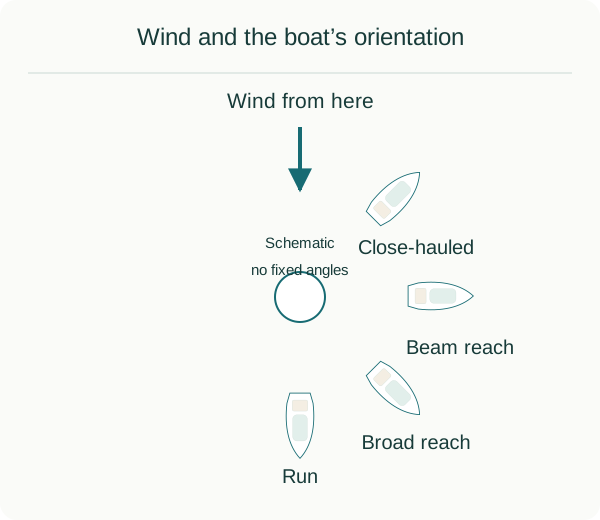
Original schematic illustration. Read the explanation and limitations in the lesson.
insideSailOriginal insideSail artwork — all rights reservedEnlarge the diagram
First think about the bow and where the wind comes from. Close-hauled sailing has the wind coming from forward, as close to its direction as the boat and conditions allow. On a beam reach, the wind is roughly across the side. On a run, it comes from behind. Other reaches describe relationships between these positions.
A diagram is not a polar
The illustrated positions are schematic. They do not assign an upwind angle, speed or wind limit to every sailboat. A polar is a performance document with its own conditions and conventions; this picture is simply a vocabulary map.
There is also true and apparent wind: the boat’s motion changes the wind experienced aboard. Check which one an instrument or document displays. Understanding these differences helps you follow practical teaching without confusing geographical direction, wind and sail trim.
The concept in a few words
Point of sail
The relationship between a boat’s direction and wind under the stated convention.
Sources and references
- Do you know your points of sail? ↗
Royal Yachting Association · Names of points of sail; terminology only
Version: Institutional page. Jurisdiction: International.
Checked on
Discuss this concept
Loading the conversation…